
PMI, Pyxus Expand Farm Mechanisation Initiative in Malawi
Malawi’s Minister of Agriculture, Rosa Mbirizi, said such partnerships are critical in complementing government efforts to modernize the agriculture sector.
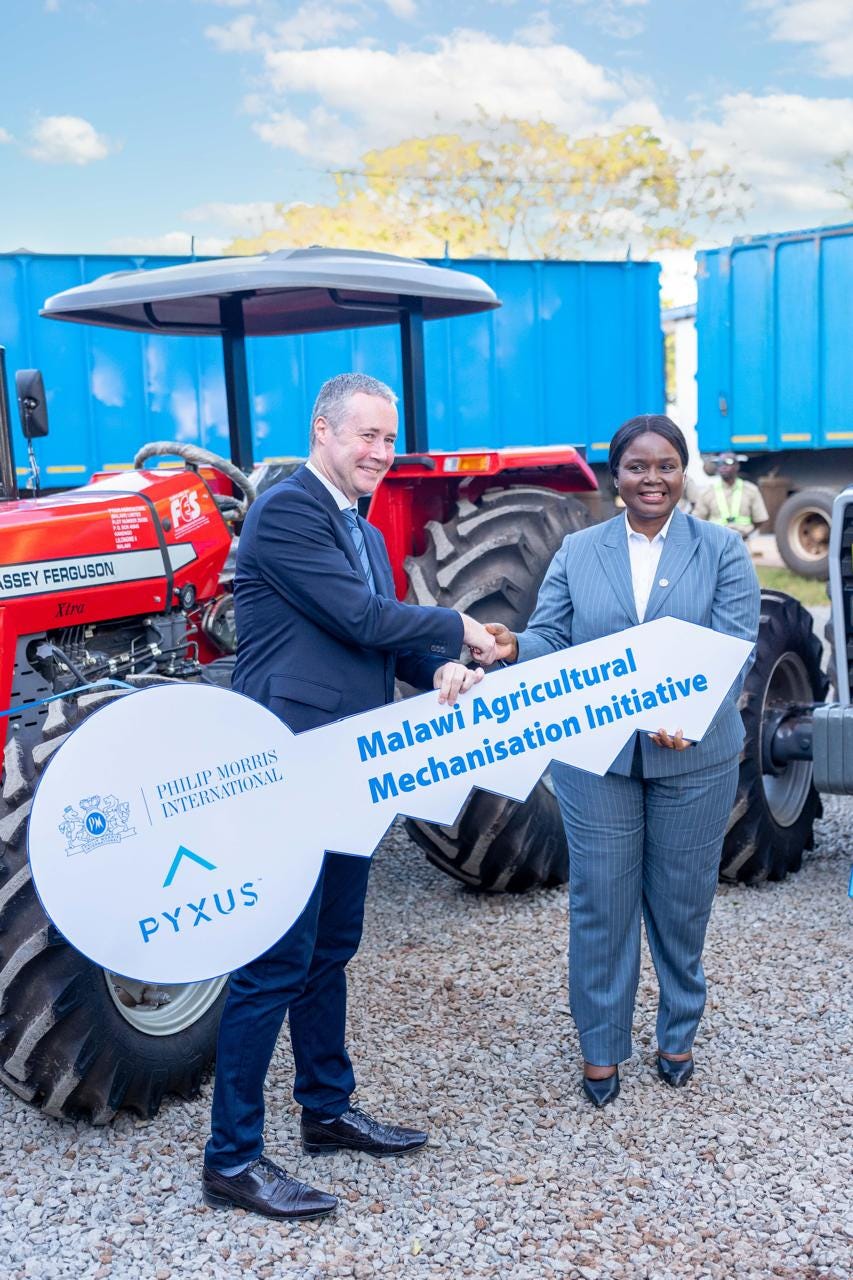
LILONGWE, Malawi —Philip Morris International (PMI) has handed over 17 additional tractors and 17 farming implements to local entrepreneurs, marking the second phase of its agricultural mechanisation initiative, writes Ireen Kayira.
Through the program, PMI has now delivered a total of 40 tractors since its launch in 2024, aiming to improve access to modern farming equipment for smallholder farmers.
PMI has partnered with Pyxus Agriculture Malawi in the implementation of the program.
Speaking during the handover ceremony in Lilongwe on Thursday, PMI Global Operations Officer Scott Coutts said the initiative is already producing measurable results.
“Through this initiative, PMI has played a key role in making mechanisation more accessible, affordable and service-oriented for farmers in the communities where we operate,” Pirie said.
Scott Coutts said the program operates on a revolving financing model, where repayments from beneficiaries are reinvested to expand the initiative and ensure long-term sustainability.
“The Malawi Agricultural Mechanisation Initiative is built on a simple but crucial premise: access matters — access to modern equipment, access to opportunities, and access to business models that allow local enterprises to grow and endure,” Coutts said.
He added that placing ownership in the hands of local entrepreneurs helps boost agricultural productivity while ensuring economic benefits remain within communities.
The model, he said, is designed to empower business owners rather than rely on short-term interventions.
Since its launch, the initiative has trained entrepreneurs, created employment for machine operators, and supported the cultivation of thousands of hectares of tobacco and other crops using mechanised services.
Coutts emphasized that sustainable impact depends on collaboration between stakeholders.
“Sustainability is strongest when it is shared — when government priorities, private-sector investment and local enterprise are aligned around practical outcomes,” he said.
Malawi’s Minister of Agriculture and Water Development , Rosa Mbirizi, said such partnerships are critical in complementing government efforts to modernise the agriculture sector.
She said promoting mechanisation remains a top priority for the ministry, driven by the urgent need to transition from manual farming methods to modern systems.
“Mechanised agriculture will enable our country to achieve greater efficiency through timely land preparation, planting and harvesting. This will not only boost productivity but also significantly reduce the heavy manual labour that has historically constrained our farmers,” Mbirizi said.