
Groundbreaking Programme to Expose How Algorithms Make Women’s Labour Invisible to African Tax Systems Launched in Geneva
The House of Fiscal Wisdom launches Project TERRA, a two-year research programme investigating algorithmic fiscal exclusion across the African digital economy in Geneva, Switzerland
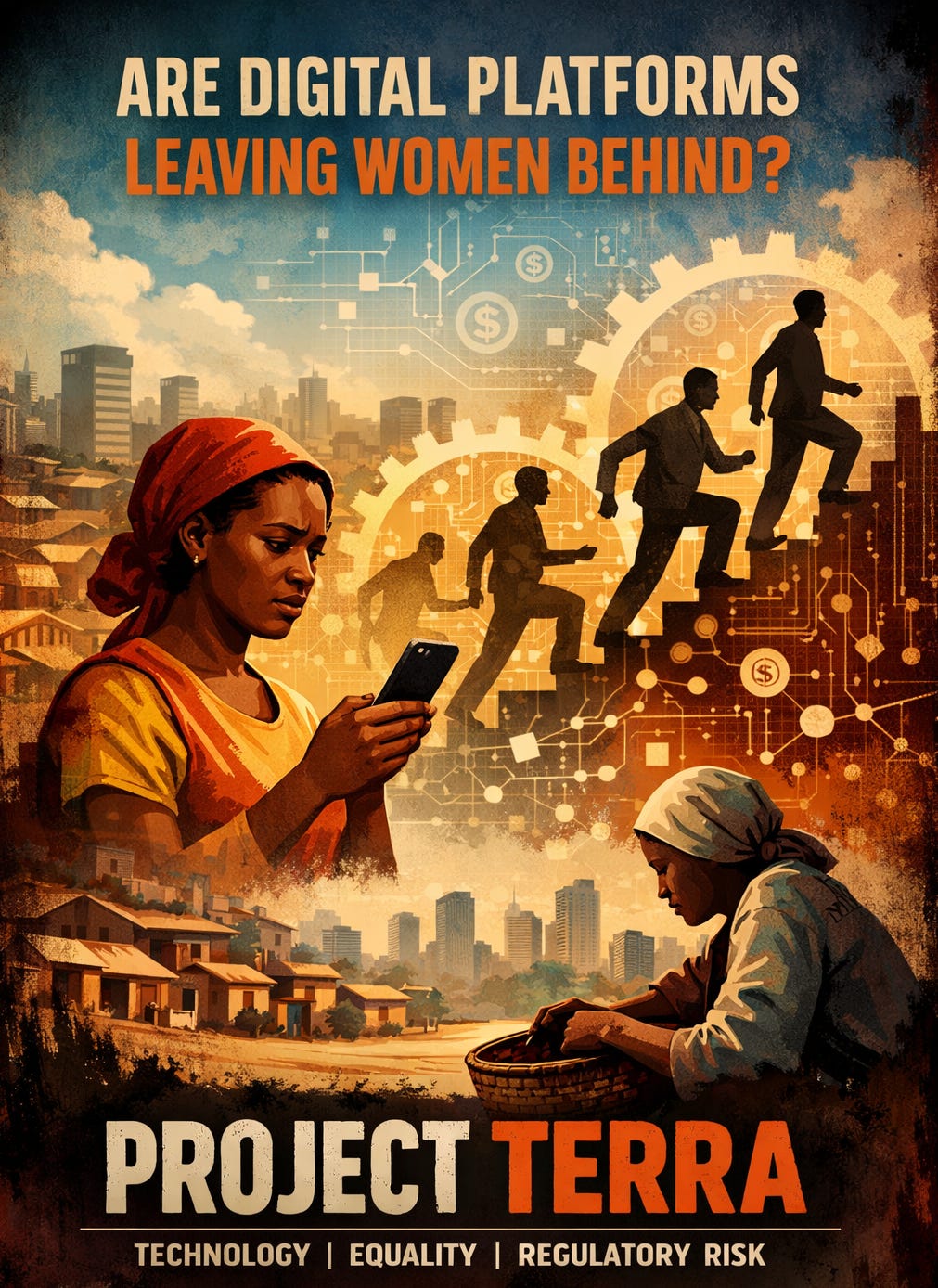
NAIROBI, Kenya—A new research programme is challenging the assumption that digital platforms expand economic inclusion, arguing instead that platform architecture systematically excludes women workers from fiscal systems across the African continent not through deliberate evasion, but through structural design choices encoded into the algorithms that govern how work is assigned, paid, and recorded, writes Lyla Latif.
Project TERRA (Technology, Equality, Regulatory Risk Assessment) is a two-year programme hosted by the House of Fiscal Wisdom and supported with funding from Luminate.
It is led by Dr Lyla Latif, a public finance and technology governance law specialist based in Nairobi.
The programme brings together legal analysis, fiscal economics, and platform governance research to address a problem that existing tax scholarship has largely failed to name: that the digital labour market is not a neutral expansion of economic opportunity, but an architecture with its own embedded fiscal ontology, one that routinely decides who is legible to the state and who is not.
The research operates through three interlocking pillars.
The first concerns algorithmic gender bias: how platform classification systems, pricing algorithms, and worker categorisation decisions replicate and amplify the existing invisibility of women’s labour within formal tax systems.
The second addresses data centre fiscal impact, examining the tax incentive regimes that African governments have extended to attract digital infrastructure investment and measuring the revenue foregone against the developmental returns actually delivered.
The third investigates regulatory sandbox design, asking whether the sandbox mechanisms currently being promoted across African jurisdictions as tools for innovation governance are genuinely capable of enabling proactive accountability, or whether their design defers scrutiny in ways that serve platform interests rather than public ones.
At the analytical core of TERRA is a five-mechanism framework for understanding how algorithmic systems produce fiscal exclusion.
The first mechanism, ontological exclusion, describes how platforms are designed in ways that erase workers as taxable subjects not by hiding them, but by constructing them as something other than workers in the first instance.
The second, proxy discrimination, identifies how algorithmic proxies used for rating, pricing, and job allocation replicate the gendered biases of pre-digital labour markets.
The third, classification asymmetry, examines how the misclassification of platform workers as independent contractors rather than employees shields platforms from the withholding obligations that would otherwise bring workers into the revenue system.
The fourth, conditionality misalignment, traces how formal tax compliance thresholds are calibrated to earning levels and documentation standards that structurally exclude the majority of informal and care economy workers.
The fifth, feedback amplification, shows how these exclusions compound across tax cycles, creating self-reinforcing systems in which prior invisibility justifies continued exclusion.
TERRA’s primary case study is South Africa’s largest domestic work platform, which connects predominantly Black women workers with household employers across the country.
The research traces how the platform’s architecture renders thousands of these workers invisible to revenue authorities not because they are evading tax, but because they occupy a fiscal no-man’s-land created by the intersection of platform classification decisions, income threshold rules, and the absence of any obligation on the platform to report or withhold on their behalf.
A second African platform case study is under active investigation.
Beyond its case study work, TERRA will produce a suite of publicly accessible tools: interactive maps showing data centre locations across the continent, the tax incentive packages governments have extended to them, critical mineral supply chains, and estimates of revenue foregone.
These tools will be designed to put credible data in the hands of civil society, journalists, tax administrators, and parliamentarians who would otherwise have no means of interrogating the fiscal terms on which digital infrastructure is being allowed to establish itself across the region.
The programme will also operate a live regulatory sandbox in Kenya, the Data Centre Risk Assessment Sandbox, which enables regulators to test fiscal and environmental accountability frameworks before they are enacted into law.
The sandbox represents a significant methodological innovation: by building the testing environment before the regulation, it attempts to invert the conventional sequence in which frameworks are written, passed, and then found to be inadequate or captured only after enforcement failures have already materialised.
Dr Latif has been direct about the political stakes of the research.
The fiscal invisibility of women workers in the digital economy is not a technical problem awaiting a software solution.
It reflects choices made by platform designers, tax legislators, and regulatory bodies about whose economic activity counts, whose income is worth tracking, and whose labour is sufficiently legible to warrant a claim on the state’s administrative apparatus.
Those choices have consequences for domestic revenue mobilisation that extend far beyond the individual workers affected.
African governments that are being asked to demonstrate fiscal credibility to international creditors whilst simultaneously extending open-ended tax concessions to digital infrastructure investors, and presiding over labour market platforms that narrow their own revenue base, face a structural contradiction that TERRA’s research makes legible for the first time in systematic terms.
The programme runs from 2026 to 2027 and is headquartered at the House of Fiscal Wisdom, a Global Commission on Financing Development in Nairobi that positions itself as an institutional alternative to the Bretton Woods architecture. Research outputs, interactive tools, and programme updates are available at www.house-of-fiscal-wisdom.org
Enquiries may be directed to director@house-of-fiscal-wisdom.org