
China Official Promotes Global Development Initiative as Path to Shared Growth

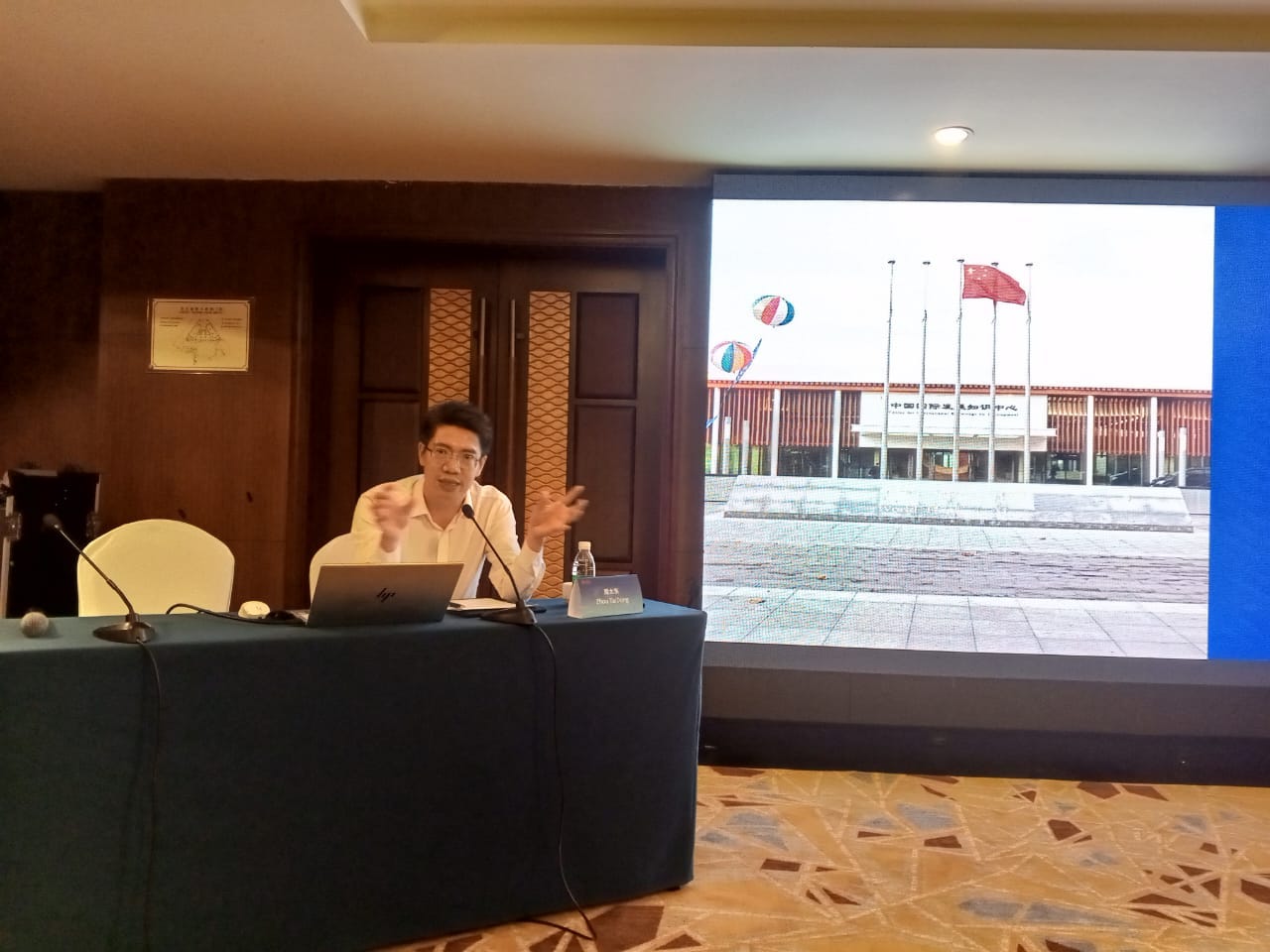
BEIJING — In a wide-ranging presentation to journalists from across the Global South, a senior Chinese development expert outlined a vision for international cooperation that prioritizes practical economic growth over Western-style institutional exports, framing the Global Development Initiative (GDI) as a necessary response to a world plagued by “poly-crisis”, writes Winston Mwale.
Zhou Taidong, representing the Centre for International Knowledge on Development (CIKD), addressed a group of international media professionals attending a 10-day youth training program on Sunday
. His presentation sought to demystify China’s role in global development while addressing head-on the criticisms regarding debt, transparency, and the competition between development models
A World in “Poly-Crisis”
Zhou opened by detailing a grim global outlook, noting that the international community is currently facing a set of challenges not seen 15 years ago
He cited a “low to moderate pace” for the global economy, widening inequality both between and within countries, and the accelerating threat of climate change as primary drivers for the GDI, which was proposed by President Xi Jinping in September 2021
“The world we are living today is facing a lot of crisis that is not seen I think 10 years ago, 15 years ago,” Zhou said, highlighting that with only four years remaining to achieve the UN’s 2030 Agenda for Sustainable Development, progress remains insufficient
He pointed to the political polarization in the United States as a cautionary tale of what happens when income gaps are left unaddressed
. “One of the key reasons is the income gap between the rich... and the [marginalized] people,” he noted, suggesting that a lack of common prosperity leads to a breakdown in societal trust
Redefining Development: Beyond the “Washington Consensus”
A central theme of the presentation was the distinction between the “Washington Consensus” and the Chinese approach to growth
. Zhou argued that while Western frameworks often focus on “exporting western institutions” and “getting the price right” through neoliberalism, China’s experience suggests a more practical, “action-oriented” path.
“Development holds the key to all problems,” Zhou emphasized, echoing a core Chinese philosophy
He described China’s own “miracle” of transforming from a poor country to its current status over four decades by focusing on infrastructure, industrialization, and a gradualist approach he described as “crossing the river by feeling the stones”
Unlike the universal models often advocated by international organizations, Zhou stressed that “all countries must find their way through trial and error”
He explicitly stated that China does not seek to “copy-paste” its model onto others, but rather to inspire partners to find paths aligned with their own local contexts
Addressing the “Debt Trap” and Transparency
Zhou spent significant time addressing the “debt trap narrative,” which he characterized as an invention that has “damaged a lot of cooperation”
Using the case of the Hambantota Port in Sri Lanka, he argued that the 99-year lease was a request from the Sri Lankan government to manage Eurobond debts and operational losses, rather than a predatory seizure by Beijing
“It has nothing to do with like China is giving money to developing countries and say okay you cannot pay back some of like strategic assets,” Zhou said
.“It’s never true because China is not occupying that sort of assets.”
However, he was candid about China’s own learning curve, acknowledging issues with transparency and the “bankability” of projects in the early years of the Belt and Road Initiative (BRI)
He explained that China’s policy banks often operated like commercial entities, utilizing “confidential clauses” to compete in the market, which fueled outside suspicion
He noted that China’s financing peaked around 2017 as the government realized the need to better manage risks
Human Capital and “Action-Oriented” Results
Critiquing past Western aid efforts, Zhou suggested that while billions have been spent, the focus was often misplaced
He noted that Western aid often trained “doctors in humanities” rather than the engineers and technicians needed to build a modern economy
In contrast, he highlighted that China has trained 100,000 African people over the last decade, specifically in science, technology, and engineering
. “Only when you have your own institutional capacity when you have your own human capital then you can get on the track of development,” he argued
He urged the attending journalists to look for success stories of local citizens using these technical skills to create jobs, rather than focusing solely on “geopolitical big stuff”
The Green Transition and AI
The GDI also addresses the shift toward green energy and the emerging impact of Artificial Intelligence (AI)
Zhou defended China’s past funding of coal plants in developing nations as a “practical” necessity for industrialization when renewable costs were prohibitively high.
However, he announced a shift: “China... announced to sort of stop building coal plants in different parts of the world because now renewable energy the cost is becoming feasible”
He advocated for “harmony between man and nature” but insisted that developed nations must fulfill their obligations to assist the Global South in this transition, given their historical responsibility for emissions
Regarding AI, Zhou warned of the potential for the technology to replace labor-intensive jobs, which has traditionally been the first step of industrialization for many nations
He suggested that the Global South must now look toward the “potential of market” rather than just “cheap cost of labor” as a future advantage
Conclusion: A Call for Cooperation
As the presentation concluded, Zhou reiterated that the GDI is an “open” initiative that welcomes participation from all countries and international organizations
He called for a stable, open international environment to prevent the “decoupling” or “de-risking” strategies of Western powers from hindering the growth of smaller, developing nations
“The key is like about working together, talking to each other, understanding each other and then sort of sharing knowledge,” Zhou told the journalists
“I think from China’s perspective the future, the opportunities is in the Global South”
.